When Is the Best Time to Buy Winter Coats?
Updated August 2026
The cheapest winter coats show up in February, when President's Day markdowns meet the season's final clearance push, while October is the worst month because cold weather and fresh inventory both push prices toward full retail.
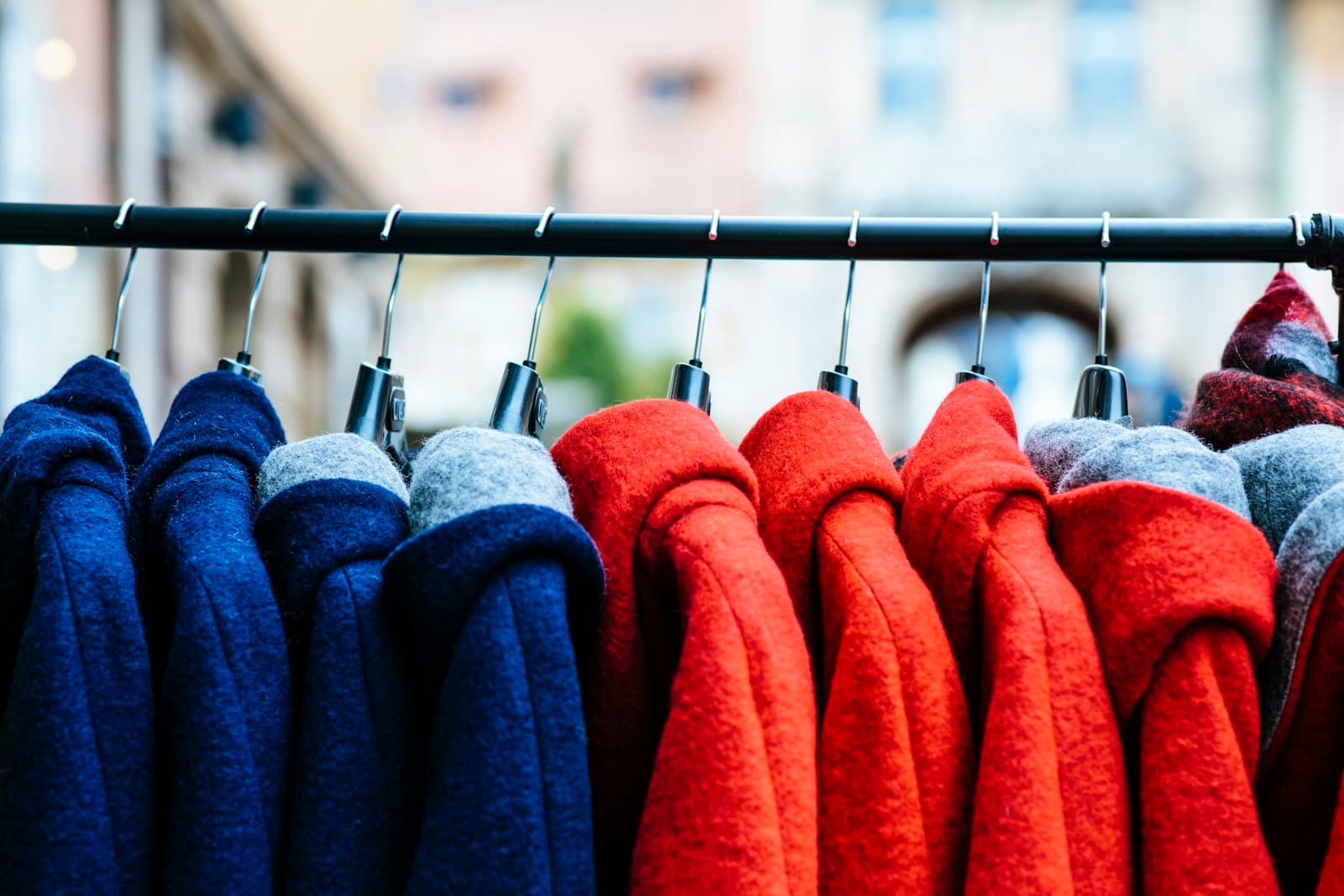
Price Seasonality Calendar
- January: Typical price — Post-holiday clearance begins and discounts deepen past Black Friday levels, though the best sizes are already thinning out
- February: Best month — President's Day sales overlap with the season's final markdowns as spring inventory starts arriving on the floor
- March: Typical price — Some of the steepest percentage discounts of the year, but remaining stock is mostly broken sizes and less popular colors
- April: Typical price
- May: Typical price
- June: Typical price
- July: Typical price
- August: Typical price
- September: Typical price — New winter arrivals reach shelves at full price as fall assortments launch
- October: Avoid — Cold snaps hit much of the country and shoppers who need a coat immediately pay close to full retail price
- November: Typical price — Black Friday and Cyber Monday bring moderate storewide discounts with the season's fullest size and color selection
- December: Typical price — Holiday gift demand keeps prices elevated until a smaller post-Christmas markdown late in the month
- Best month
- Avoid
- Typical price
| Month | Status | Why |
|---|---|---|
| February | Best month | President's Day sales overlap with the season's final markdowns as spring inventory starts arriving on the floor |
| October | Avoid | Cold snaps hit much of the country and shoppers who need a coat immediately pay close to full retail price |
Which months are cheapest to buy a winter coat?
Winter coats follow one of the most reliable clearance cycles in apparel, and it is driven by shelf space rather than temperature. Retail analysts and deal trackers such as The Krazy Coupon Lady describe a "buy last year's coat this year" dynamic: stores need floor and rack space for spring merchandise, and that changeover typically starts in February. Search data on retail sale calendars points to January through March as the core discount window, with roughly 90% of winter clearance activity on coats concentrated in those three months. Within that window, February stands out specifically because President's Day promotions land in the middle of the same period when stores are already marking down remaining winter stock to make room for what is arriving next — a rare case of a calendar holiday and an inventory-driven markdown hitting at the same time. January is a close second, with meaningfully better selection than February but somewhat shallower average discounts. By March, percentage discounts can look even larger, but that is partly because what remains is the leftover mix of unusual sizes and less popular colors that did not sell during the first pass in January.
Why do coats follow a different calendar?
General clothing pricing softens gradually as each season fades, but outerwear has a sharper trigger: a hard changeover to spring collections that retailers actively want on the floor by February. NerdWallet's monthly buying guides describe this same late-January-into-February window as one of the year's best times to shop specifically because retailers are clearing bulky seasonal categories, not because demand for clothing broadly has dropped. That distinction matters for coats more than for, say, everyday shirts or jeans, because a coat that does not sell by spring cannot simply be kept on a shelf year-round the way basics can — it takes up disproportionate space and typically gets marked down harder to move it before storage costs pile up.
How deep is clearance, and how late can you wait?
Multiple retail trackers converge on a similar range: winter coat clearance commonly runs 50–70% off original price by February, with some listings citing discounts as steep as 50–75%. Store-specific patterns reinforce the general calendar — coverage of Macy's clearance cadence notes markdowns starting in mid-January with the deepest cuts arriving once its "Last Act" clearance kicks in during February, and T.J.Maxx runs a dedicated clearance event in January (with a second one in mid-summer, unrelated to winter coats). Waiting into March can push discounts even further on paper, but you're choosing from what other shoppers left behind for six to eight weeks, so the theoretical bottom price and the realistic price for a coat you'd actually want to wear can diverge by March.
What is actually left on the rack in January?
The tension in this pattern is straightforward: the deepest discounts and the best selection do not arrive at the same time. Early January still has reasonably full size runs and color options alongside meaningful markdowns. By February, common sizes in popular colors are noticeably thinner, even though the percentage discount is often better. If a specific size, color, or style matters to you, shopping earlier in the clearance window trades a few percentage points of discount for a real chance of finding it; if you're flexible on color and can wear a common size, waiting closer to February or into March maximizes the discount with acceptable risk.
Is Black Friday a good time to buy a coat?
If you need a coat for the winter that's about to start rather than the one after, Black Friday and Cyber Monday are the realistic alternative to waiting for January clearance. Sources describing this trade-off consistently put Black Friday-era coat discounts in a lower band — commonly cited as roughly 25–40% off — compared with the 50–75% range typical of January and February clearance. What Black Friday buys you instead of a rock-bottom price is availability: full size runs, current-season styles, and colors that will be gone by the new year. For anyone shopping for a coat they'll actually wear this winter, not next winter, that trade-off is often worth it.
What do fill power and waterproofing cost you?
Technical and performance outerwear adds a second pricing dimension on top of the seasonal calendar: the insulation and shell technology inside the jacket. REI's consumer guidance on down explains that fill power — a measure of loft per ounce of down, generally rated between roughly 500 and 800 in mainstream outerwear, with specialist gear reaching 900 or higher — tracks closely with both warmth-to-weight ratio and price. Outdoor gear reviewers including GearJunkie and Switchback Travel document a fairly consistent tiering in their annual roundups: budget-oriented down jackets with lower fill power and simpler shells commonly land in the low-to-mid hundreds of dollars, mid-range technical jackets with high-quality down and technical shell fabrics tend to sit in the $300–$400 range, and premium jackets using the highest fill-power down and the most weather-resistant shells can run $400–$600 or more. None of this changes when the seasonal clearance window opens, so a shopper choosing a higher-tier technical coat should expect the same percentage-off timing as any other coat, applied to a meaningfully higher starting price.
Are outlet stores cheaper on the same calendar?
Outlet and factory stores generally follow the same January–March clearance rhythm as full-line retailers rather than running on their own independent schedule — coverage of Gap Factory's winter sale cadence, for instance, describes extra-percentage-off promotions on outerwear beginning in January, in line with the broader clearance window. The meaningful difference at outlet stores isn't timing; it's the baseline price the discount is calculated from, since a portion of outlet inventory is manufactured for the outlet channel at a lower starting price point rather than being marked-down full-line stock. That makes outlet clearance genuinely cheaper in absolute terms in many cases, but it also means the "% off" figure on an outlet tag isn't directly comparable to the same percentage off a department store's regular-line coat.
Does clearance work for kids' coats?
Buying advice compiled by outlets including CBS News and children's outerwear retailers converges on a simple reality: a growing child is unlikely to fit the same coat for two full winters, and sizing decisions matter as much as timing. The common recommendation is to size up modestly — enough room to layer a sweater or hoodie underneath without going so large that the coat traps too little heat or creates a safety issue with sleeves and hems. That single-season (or, at best, two-season) replacement cycle changes the clearance math for parents: buying a discounted coat in February for a child who will need a new size by the following winter anyway can make sense, but buying a larger size specifically hoping to stretch it across two winters is a bet against how quickly the child grows, not a guaranteed saving.
Does your climate change when to buy?
The national retail calendar assumes a national winter, but demand for coats doesn't actually arrive on the same date everywhere. Reporting on cold-weather retail behavior — including Fortune's coverage of an early-season arctic blast driving a spike in coat sales across the Midwest and East Coast — illustrates how a hard, early cold snap in a northern region can pull demand (and full-price buying) earlier than the general September–October new-arrival calendar would suggest, while regions with mild winters see comparatively little seasonal spike in coat demand at all and retailers there stock lighter jackets rather than heavy insulated coats in the first place. If you live somewhere winter arrives early and hard, the standard advice to wait for January–February clearance carries more risk of going without a coat you need sooner; if your winters are mild, there's less urgency to buy before the deepest discounts land.
Is layering cheaper than one heavy coat?
An alternative to buying one heavy insulated coat is building a layering system — typically a weatherproof shell plus a separate insulating midlayer — instead of, or alongside, a 3-in-1 jacket that zips the two together. Coverage from outlets like Switchback Travel and Backpacking Light's community discussions notes that a quality shell alone commonly runs around $300, with high-end technical hardshells reaching $700–$800, while a separate midlayer adds further cost — so a full two-piece system is not inherently cheaper than one heavy coat, and can cost more if both pieces are purchased at the technical/premium tier. The economic case for layering instead rests on versatility and reuse: the pieces can be worn separately across a wider range of temperatures and seasons, and buyers often already own at least one of the two pieces (a fleece or lighter jacket), reducing the net new spend. Gear Patrol's critique of integrated 3-in-1 jackets, in particular, argues that the built-in convenience of a single zip-together garment works against the core advantage of true layering, which is being able to mix and swap pieces independently rather than being locked into one manufacturer's matched set.
How reliable is this coat pricing pattern?
The core finding here is well supported and consistent across independent sources: multiple retail trackers, deal-focused outlets, and general personal-finance guidance all point to the same January–March window for winter coat clearance, with February singled out repeatedly because of the President's Day and spring-changeover overlap. That part of the pattern is safe to rely on. Where the sources are less trustworthy is in the exact discount percentages — you'll see figures ranging from "50–70% off" to "50–75% off" to "up to 70%" depending on the source, and Black Friday discount estimates likewise range from roughly 25% to 40% depending on who's reporting it. These are marketing-adjacent figures from retailers and deal sites rather than independently audited pricing data, so treat any specific percentage as a rough directional signal rather than a number you can bank on for a particular coat or store. The regional and technical-outerwear pricing points draw on a smaller set of sources than the core seasonal pattern, so hold those conclusions a bit more loosely, and always compare against a coat's price history where you can rather than trusting a single "% off" tag at face value.
Related guides
Winter coats are a distinct seasonal category with their own clearance calendar, but many of the same general shopping principles — like watching for end-of-season markdowns and factoring in outlet pricing — apply more broadly across apparel; see our guide to general clothing shopping for the wider picture beyond outerwear specifically.
Frequently asked questions
- Which months are cheapest?
- Based on the seasonality data on this page, the cheapest months are typically February.
- Which months are most expensive?
- Prices tend to be highest in October.
- Are there specific dates behind this pattern?
- Yes — President's Day sales overlap with the season's final markdowns as spring inventory starts arriving on the floor (February).
More guides like this
When Is the Best Time to Buy Shoes?
For most shoes, timing since a specific model's release date matters more than the calendar month, though January clearance, back-to-school week, and Black Friday still deliver genuine broad markdowns across categories.
- January: Best month
- February: Typical price
- March: Typical price
- April: Avoid
- May: Typical price
- June: Best month
- July: Typical price
- August: Best month
- September: Avoid
- October: Typical price
- November: Best month
- December: Typical price
When Is the Best Time to Buy Clothing?
Clothing is cheapest during end-of-season clearance: January through early February for winter items, and July into August for summer items. New seasonal collections in March and September arrive at full price.
- January: Best month
- February: Typical price
- March: Avoid
- April: Typical price
- May: Typical price
- June: Typical price
- July: Best month
- August: Typical price
- September: Avoid
- October: Typical price
- November: Typical price
- December: Typical price
When Is the Best Time to Buy an Engagement Ring?
Engagement ring prices peak from November through Valentine's Day in February, when proposal season drives the highest demand. Prices ease in late spring and again in midsummer, outside of the peak proposal window.
- January: Avoid
- February: Avoid
- March: Typical price
- April: Typical price
- May: Best month
- June: Typical price
- July: Best month
- August: Best month
- September: Typical price
- October: Typical price
- November: Typical price
- December: Typical price
When Is the Best Time to Buy Jewelry?
Fine jewelry tends to be cheapest during the post-holiday clearance window in early January and around Black Friday/Cyber Monday in late November, but gold and silver spot prices can push costs up or down independent of any seasonal sale.
- January: Best month
- February: Typical price
- March: Typical price
- April: Typical price
- May: Typical price
- June: Typical price
- July: Best month
- August: Best month
- September: Typical price
- October: Typical price
- November: Best month
- December: Avoid